Published 7 July 2026 by Mila Duncheva -
Carbon neutral buildings -
Circular economy
When we talk about the future of our building and cities discussions often focus on which materials we should use.
A more important question may be: how do we design better systems?
At the recent New European Bauhaus discussion, which was organised by the European Commission and hosted in Brussels - one theme stood out. The decisions we make today about how materials, carbon, and circularity are addressed in buildings will shape outcomes for decades.
Taking a long-term view on carbon
In construction, we are often too focused on the immediate.
But buildings last. Materials last. And so does their impact.
A whole-life perspective changes that. It pushes us to think beyond the point of construction and consider:
- how materials are produced
- how they perform over time
- how they can be reused or repurposed
From that perspective, something becomes clear:
Affordability and carbon reduction are not in conflict; in fact;, they can reinforce each other when we optimise across the full lifecycle.
This intersection is where we should focus our attention.
Circularity is no longer a future ambition; it is becoming a practical requirement.
Another shift I see clearly is around circularity.
Not long ago, circular construction was something we talked about mainly in pilot projects and concepts. That is changing.
Today, we see it in practice:
- more renovation and refurbishment
- extending existing buildings – especially vertically - instead of replacing them
- increasing demand for recycled and renewable materials
Circular economy principles are moving into the mainstream. However, if we are to unlock their full environment, social and economic potential, we need to accelerate adoption and scale solutions more quickly.
At the NEB Festival Fleming Voetman, VP, External relations and Sustainability, VELUX highlighted the importance of refurbishing homes to increase well-being. While Martin Skea, Co-Founder and CEO, ToGatherHomes and Jan Wurm Professor, KU Leuven and EU Engagement Lead, ARUP explored the role of prefabricated and bio-based solutions.Together, their perspectives point to an industrialised, biogenic circular economy as a potential source of Europe’s competitive edge.
The challenge now is to move from good examples to standard practice.
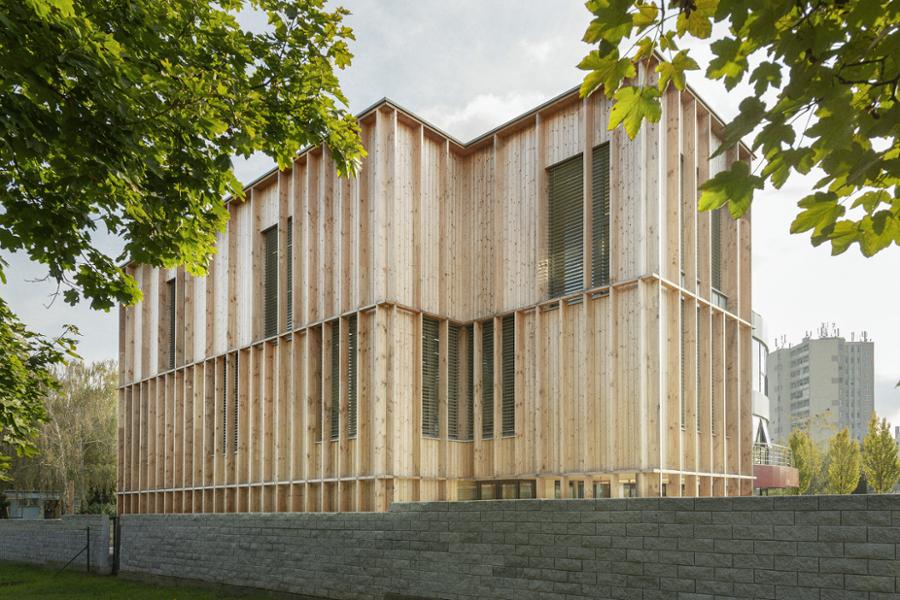
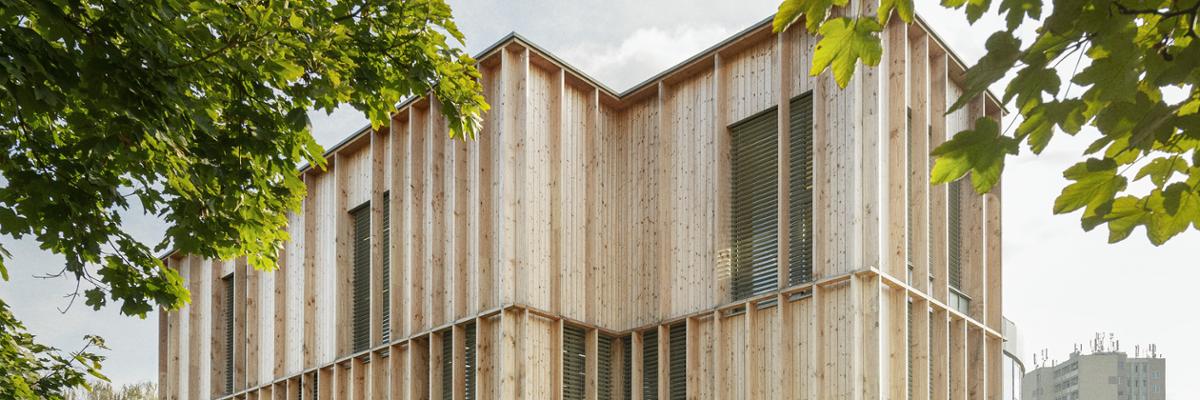
Photo by by Stora Enso partner: CLT Slovacia/©Michal Lachkovič, showing the extension of the Andel Elite Dental Center in Slovakia.
Materials matter but how we use them matters more
At Stora Enso, we manufacture renewable materials made from wood because they can help reduce embodied carbon, store carbon over time, and support circular construction models. But I think it’s important to be very clear:
There is no single material that solves everything.
What matters is how we design systems:
- using materials efficiently
- combining them intelligently
- thinking long-term about carbon and reuse
This is where we need to move the conversation — from “which material” to “how do we build better systems?”
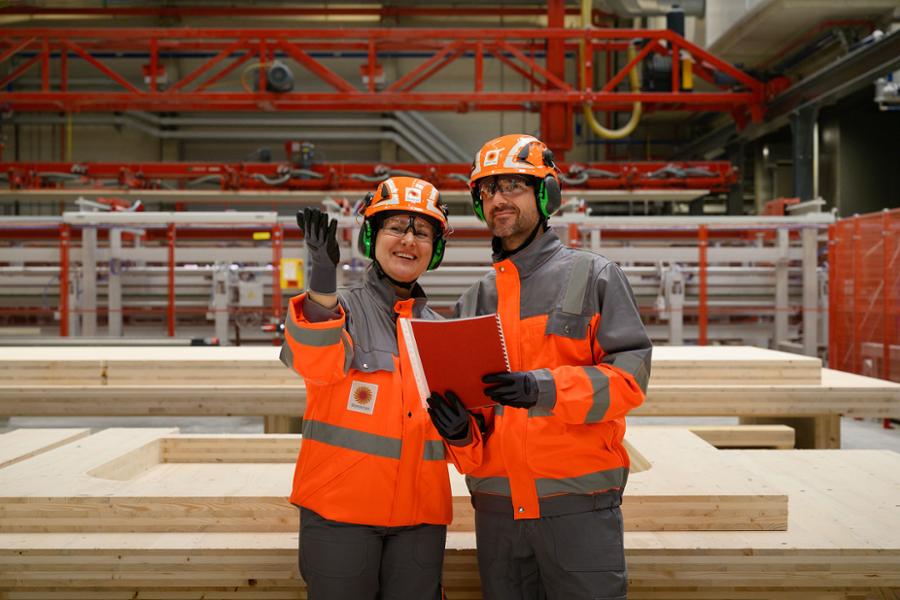
Collaboration is what enables change
Something we discussed openly is that the industry already has many of the solutions we need.
What we don’t always have is alignment.
Collaboration across the value chain is what will determine how fast we move — and ultimately enable the industry to transition at scale
That means stronger connections between:
- developers and cities
- research and commercialisation
- policy and implementation
Because without that alignment, even the best ideas stay small.
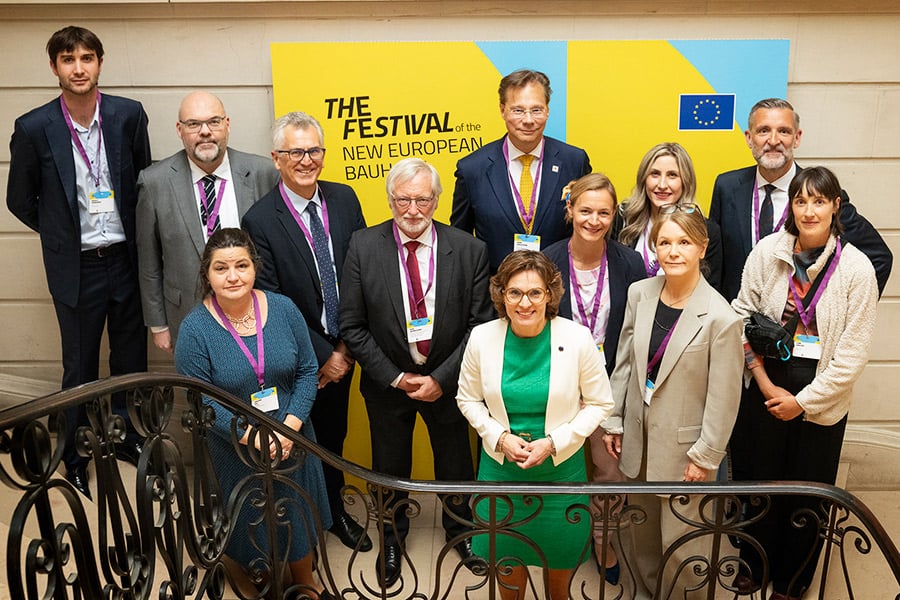
Photo: Participants at the 2026 New European Bauhaus Festival, including Stora Enso CEO Hans Sohlström and European Commissioner Jessika Roswall.
Inclusion should not be an afterthought
Sustainable buildings are ultimately built for people. That means designing not only for carbon performance, but also for affordability, accessibility, and quality of life.
If we want sustainable outcomes, people need to be included in the choices that shape building and infrastructure development.
This means:
- engaging communities in developments’ local areas
- designing for how people live today
- ensuring access to healthy, affordable spaces
Inclusion is central to creating resilient, lasting built environments.
Moving from discussion to delivery
The New European Bauhaus reminds us that sustainability is multidimensional, requiring us to balance environmental, social and economic considerations rather than viewing them in isolation. For me, that translates into a few clear priorities:
- taking a long-term view on materials and their carbon impact
- embedding circular economy principles into how we design and build
- strengthening collaboration to enable industry-wide transformation
- including people in the decisions that shape our built environment
The decisions we make today about materials, carbon, and circularity will shape the built environment for decades to come.
If you want to go deeper
We’ve explored these topics further in a recent Stora Enso white paper, looking at how long-term carbon thinking and circularity can be applied in practice: