The two-year collaboration marks a new chapter in advancing biodiversity, driven by scientific curiosity, practical innovation, and a shared commitment to positive outcomes. The objective is to take IUCN's metric, applied by Stora Enso in the Nordics, and apply it now in southern Bahia, where Veracel operates. The metric allows to identify, prioritise and restore those degraded areas within the Atlantic forest biome where the extinction risk of endangered species can be reduced the most.
“The metric remains the same, but its application is tailored to a new context. To truly make a difference for biodiversity, there needs to be a universal measurement system, one that is recognised and adopted not just by individual companies, but across entire industries and by governments around the world. Only then can we ensure that our actions are meaningful and that progress is understood and measured on a global scale,” says Luiz Tapia, Director of Sustainability at Veracel.
From ambitious goals to measurable outcomes: insights and adaptation from the Nordic collaboration
The groundwork for the collaboration between the IUCN and Veracel in Brazil was laid in the Nordics where Stora Enso’s partnership with IUCN set out to answer the question: How can we know if our actions are truly benefiting biodiversity? While setting targets is a crucial first step, progress can only be achieved if there is a clear way to measure outcomes.
“We set a target in 2021 to have a net positive impact on biodiversity in our forest assets and plantations, but we needed a measurement system. There are different systems for measuring biodiversity, but none have been focused on describing future outcomes at the scale we needed. Unlike climate, where we have clear metrics to track progress, biodiversity measurement has often been passive – making it difficult to assess the impact of our actions. This work changes that,” says Toby Croucher, Chief Sustainability Officer, Stora Enso.
The solution emerged through the development of the IUCN STAR (Species Threat Abatement and Restoration) metric. STAR is grounded in the Red List of threatened species, so when the Stora Enso team integrated STAR with Sweden’s forestry planning system Heureka, they established a method to simulate and compare the outcomes of various forest management scenarios—not only for timber production but also for biodiversity and threatened species. If implemented comprehensively, this approach enables forestry planners to enhance biodiversity by optimising potential trade-offs and prioritising actions that deliver the greatest positive ecological impact.
Thanks to these findings, Stora Enso’s collaboration with IUCN in the Nordics was far more than a mere technical exercise but illustrated how scenario modelling can inform restoration strategies. It demonstrated that, with robust data and sophisticated modelling, biodiversity can be quantified and managed together with economic objectives. Crucially, this initial phase of the IUCN partnership is not the conclusion, but rather a solid foundation for continued improvement in biodiversity management across Nordic forests and the broader forestry sector as well.
A new chapter starting in Brazil
With this goal in mind, the next phase of adapting and testing the STAR framework is about to continue in Brazil’s Atlantic rainforest, one of the world’s most biodiverse regions. The two-year collaboration between Veracel and IUCN during 2026 and 2027 intends to adapt and further test the lessons from the Nordic collaboration in a new forest ecosystem. By applying the STAR framework in this different context, the partnership seeks to advance the development of a robust and practical metric that could be used for biodiversity in forestry worldwide.
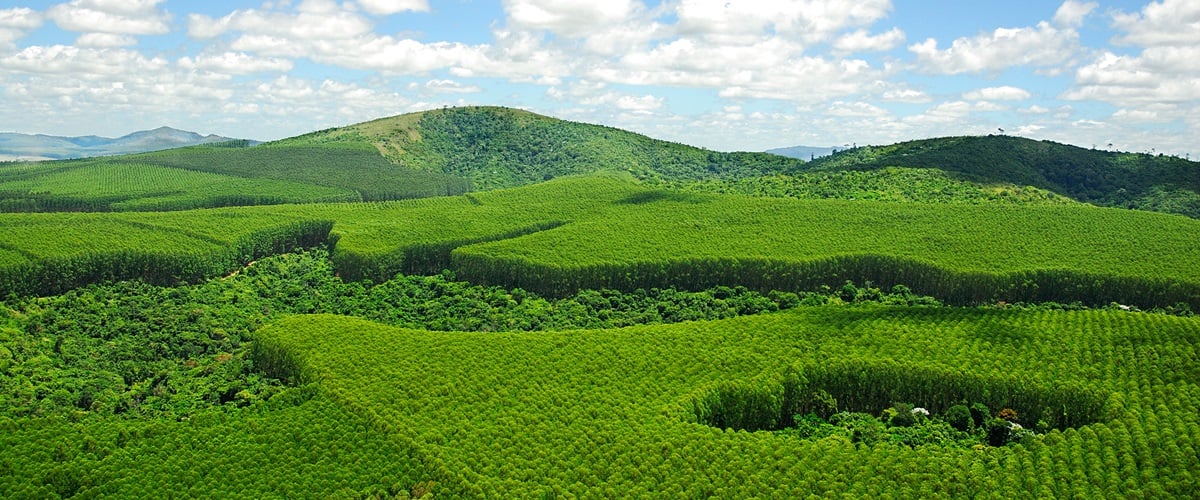
Veracel presents a markedly different landscape compared to the Nordic forests. Half of its land is devoted to eucalyptus plantations, while the remaining half is reserved for conservation purposes, encompassing voluntary set-asides and private reserves. The challenges in this region are significant: much of the area has suffered degradation, and natural regeneration alone is insufficient. Veracel has adopted a proactive approach, restoring hundreds of hectares annually by planting native species and trialing innovative funding models such as carbon credits to enable restoration on a larger scale.
The first year of the collaboration will focus on establishing a scientific baseline by mapping habitats, engaging communities, and identifying priority areas for action. The second year will move from knowledge to impact, developing a roadmap that uses the STAR metric to measure progress and guide restoration in those areas where threatened species can be benefited the most. It will also be used to consider connectivity between these restoration areas and existing Atlantic forest, nearby conservation reserves, and national parks.
Setting a new standard for measuring biodiversity
The partnership aims to provide scientific evidence of net positive impact and establish the STAR metric as a common language for measuring and improving biodiversity. The significance of this work goes beyond any single company or region. As technological capabilities and data quality continue to progress, the STAR framework evolves and holds promise for delivering even greater value—not only to Stora Enso’s own initiatives but potentially to the broader forestry sector as well.
Tree plantations form an integral part of the landscape in many parts of the world, and when managed sustainably, they can make a significant contribution to ecosystem restoration and conservation, supporting the achievement of global biodiversity goals.
“The collaboration between science, industry, and conservation supports achieving the targets of the Global Biodiversity Framework and helps develop a methodology which hopefully inspires the wider forestry sector, and everyone committed to the future of our planet’s forests.”, summarises Johanna Hagelberg, EVP Biomaterials, Stora Enso.


