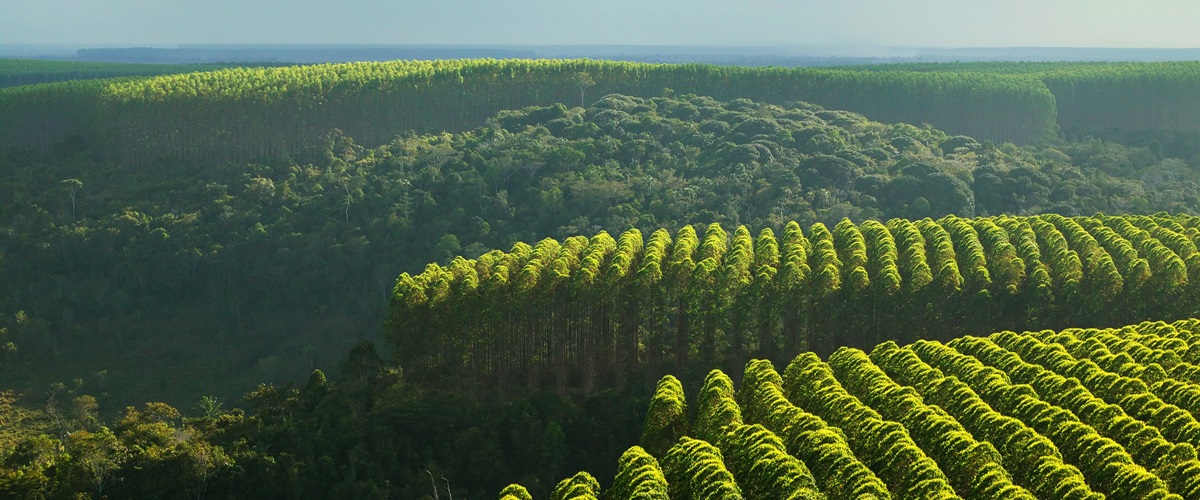
Stora Enso’s presence at COP30 in Brazil was especially significant due to our joint-operation Veracel, that manages plantations and pulp production in Bahia, Brazil. COP30 provided us and Veracel a unique platform to connect with a range of stakeholders and engage them in meaningful dialogue around biodiversity, rainforest restoration, human rights, and local communities. Being on the ground in Brazil and engaging with stakeholders, we want to reinforce collaborative action in regions where our operations have a direct impact and learn how to improve on this.
To highlight our ongoing commitment and gain valuable insights into development areas, we hosted three panel sessions around community resilience, biodiversity and forest restoration. During the sessions, we deepened our understanding with stakeholders, respected panellists, and an active audience. The discussions were marked by constructive dialogue and valuable insights from all participants - including representation from indigenous communities, which enriched the conversation and broadened perspectives.
Session 1: Resilient communities – Mitigating climate change impacts on livelihoods
The panel focused on the challenges climate change poses to rural and indigenous communities in Brazil. To mitigate these impacts and build resilience long-term, the panellists agreed there needs to be a deep understanding of communities’ needs, genuine dialogue and empowerment within communities. Companies need a holistic, long-term approach across their supply chains, integrating human rights alongside climate and nature impacts in due diligence processes.
To move forward, the panellists agreed that companies should see community work as broader than ESG compliance, investing in entire ecosystems and engaging openly with vulnerable groups even in difficult topics. Building resilience requires collective action, ongoing education, and a commitment to addressing difficult issues together. The ultimate goal is to ensure that communities are at the centre of solutions that can have a lasting positive impact over generations.
Session 2: Forest restoration – From incremental gains to systematic impact
The panel addressed the urgent need for large-scale restoration of the Atlantic Rainforest that has diminished and is a global hotspot for biodiversity. The discussion highlighted collaborative efforts, such as the Atlantic Forest Restoration Pact, bringing together over 360 organizations, including Veracel. Restoration was framed as a holistic challenge - beyond tree planting, it requires ecosystem rebuilding, landscape connectivity, and community engagement.
For restoration to truly scale, the panel emphasized breaking through mindset barriers and collaborating across communities, businesses, the public sector, and finance to unlock needed capital. Restoration is not only driven by environmental values but by the need to build resilient landscapes and communities for the future, with opportunities presented by nature-based solutions and carbon markets as well. One restoration initiative taking these diverse aspects forward is Biomas and their Muçununga Project with Veracel, launched this autumn.
Session 3: Towards net positive impact on nature – Using science-based metrics to measure biodiversity gains
The panel explored how to mitigate biodiversity loss and achieve a net positive impact on nature, emphasizing the need for robust, science-based metrics. Key topics included better research infrastructure and funding for science to tackle the limitations of current methodologies and local knowledge. The panel underscored the importance of integrating human dimensions and community involvement into biodiversity strategies, ensuring that ecological goals align with social realities.
To advance, the panel called for rapid deployment of technology solutions to support biodiversity efforts and maintain the momentum to turn interest into action. There is a need for holistic solutions that bring together different agendas and local perspectives. Especially strengthened public-private partnerships are needed to fund and develop biodiversity tools as well as link economic activity to ecological restoration, with clear, science-based criteria. One example is Stora Enso’s recent biodiversity partnership with the IUCN in the Nordics, now extended to Veracel and the Brazilian environment.
Forward with strengthened partnerships and holistic approach
Reflecting on COP30, the path forward demands a multidimensional and multigenerational approach: one that places people, climate, and nature together at the heart of all decisions. Our work with Veracel continues to be shaped by these learnings, guided by long-term impact and due diligence as the basis. Our commitment to positive change continues with recent partnerships, such as those with Biomas and the IUCN. With these foundations, we look ahead – ready to turn ambition into action and create lasting value for people and the planet.


