Our history
Rooted where material and ideas evolve
Long before renewable paper-based materials became a growing focus in the industry, our story had already begun.
That story began in 1200's in Falun – with materials and how to use them wisely.
In Sweden, Stora Kopperberg delivered copper from Falun helped shape economies across Europe, used in coins, roofs, and structures that defined entire cities. Around it, forests were already essential, providing energy and supporting early industry.
Centuries later, a different story began to take shape. Enso sawmill was established in Finland, and for Stora, forests in Sweden became more than support. They became the material itself. A century later, the two merged. Sawmills, pulp mills, and board production followed, each step driven by a simple idea: to use every part of the resource in the most valuable way.
That mindset still defines us today.
Stora Enso is built on more than 700 years of transformation. From mining to forestry into paper-based packaging, wood products, and biomaterials. Throughout that journey, the focus has been on creating value from natural resources.
More than 700 years. One continuous shift.
From mining to materials. From extraction to renewal. From regional roots to global reach.
Highlights from our history
The 1200s
-
1288 – where it begins
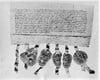
The first recorded document of ownership in the Falun copper mine marks the start of one of the world’s longest corporate histories. Copper from Falun would go on to shape economies across Europe, used in coins, buildings, and infrastructure.
The 1700s
-
17th century – powering a continent
The Falun mine becomes one of Europe’s most important industrial sites.
Copper from Sweden supports trade, technology, and growth across the continent, used in coins, buildings, and infrastructure.
At the same time, innovation was already happening beyond metals.
By-products from mining gave rise to Falu red paint, which would go on to shape the visual identity of Swedish landscapes for centuries.
Forests surrounding the mines played a crucial role – providing energy, materials, and supporting early industry.
The 1800s
-
1862 – industry takes shape
Stora Kopparbergs Bergslag is formally established. Centuries of mining and forestry activities come together into a modern industrial company – laying the foundation for future transformation.
-
1872 – a new material era takes shape
In Finland, a steam-powered sawmill begins operating in Kotka – marking the start of Enso and a new phase of industrial wood processing. But the shift had already begun earlier in Sweden, where sawmilling had been developing for decades.
Now, it accelerates. Across both countries, one idea starts to define the future: use the whole tree efficiently, and with purpose.
-
Late 1800s–1900s – from wood to products
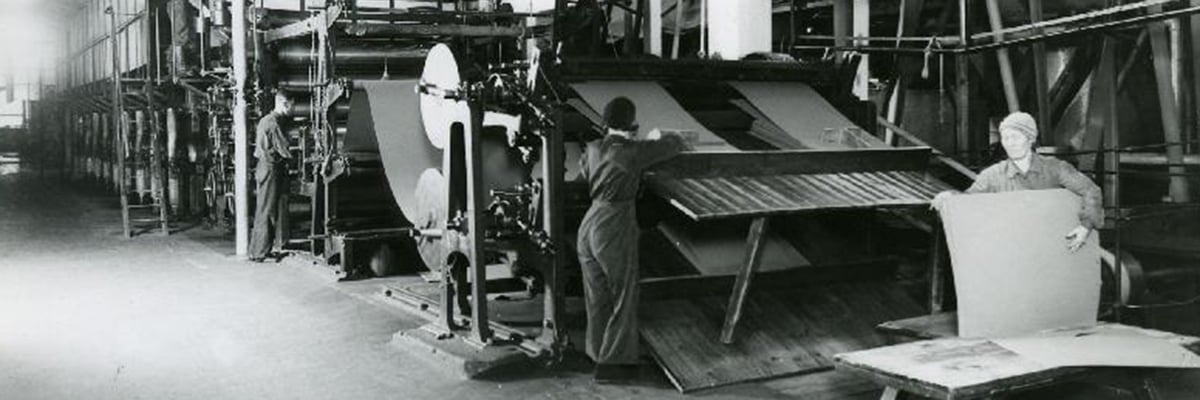
What was once excess becomes opportunity. Sawmilling evolves into board, pulp, and paper production, driven by growing demand for packaging, communication, and everyday materials. At the same time: literacy rises, populations grow and demand for paper and packaging increases. Materials evolve alongside society.
The 1900s
-
Early 1900s – innovation from every fibre
The idea of using the whole tree becomes a powerful engine for innovation.
As wood processing evolves, materials once considered excess are transformed into valuable products. From pulp and board to chemical by-products such as tar, turpentine, methanol, resin, and pine oil – each part of the tree finds a purpose.
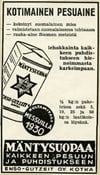
Some of these innovations reach everyday life. Products like pine soap become part of households, connecting industrial processes with daily use.
Using resources as efficiently as possible – getting more value from every fibre – becomes a defining principle. Not just for production, but for how the business grows and innovates.
-
1900s – materials in motion
Rivers, lakes, and seas form early logistics networks.
Timber is transported downstream.
Products move from coastal mills to Europe and beyond. Both Stora and Enso develop shipping operations – building fleets and delivering materials at scale.
Because producing materials is only part of the story. Getting them where they need to be is equally important.
-
1992 – a defining shift
Mining operations in Falun come to an end. After centuries, the focus has fully shifted, from what lies beneath the ground to what grows above it.
A transformation completed.
-
1998 – two histories become one
Stora and Enso merge.
Swedish and Finnish industrial heritage combine to form Stora Enso – a global company built on shared values, materials, and innovation.
Today
-
Today – materials based on renewable raw materials
Stora Enso focuses on packaging based on renewable paper-based materials, wood products, and biomaterials. We develop solutions for applications traditionally served by fossil-based materials and support approaches that promote material efficiency and recovery.
The raw material foundation remains the same. What has changed is how it is used.
A few photos from our past







Where it began: copper, forests, and industry
In the beginning, everything revolved around copper.
The Falun mine was more than a workplace; it was an engine of progress. It shaped communities, drove innovation, and supported economic growth for generations. For centuries, its influence extended far beyond Sweden.
And yet, even as the mine defined the business, another resource quietly took on greater importance.
Forests surrounded the operations. Wood was essential, for fuel, for construction, for sustaining the mining process itself. Over time, forestry became more than a support system. It became an opportunity.
What started below ground was already beginning to grow above it.
By the mid-19th century, this shift had taken clearer form. Mining, iron, and wood were no longer separate activities, but part of a broader industrial system, one that would eventually move toward something entirely new.
A shift above ground
Change didn’t happen overnight but it reshaped everything.
Step by step, the focus moved from extraction to cultivation. From metals to wood and fiber. Sawmills grew into integrated material systems, with board, pulp and paper becoming central. Using wood material efficiently has helped shape innovation and growth throughout our history.
At the same time, logistics evolved into a core capability. From river transport to global shipping networks, materials were designed not only to be produced –but to reach markets reliably. By the time mining ended in Falun, the transformation was complete. What had once defined the company had given way to something new.
Not an ending but a turning point.
Across the sea: The Enso story
At the same time, a different chapter was taking shape in Finland. In 1872, a steam-powered sawmill in Kotka brought speed, scale, and new possibilities to wood processing. Built on access to vast forests and strong export markets, it marked the beginning of Enso.
From the start, the ambition was clear: to use every part of the tree in the most valuable way and to meet the growing needs of people in Europe and beyond.
What began with sawn timber quickly evolved. As demand increased, so did innovation. What was once considered excess became opportunity, leading to the development of board, pulp, and later paper. Each step added more value, more functionality, and more reach.
Driven by industrial know-how and a deep understanding of materials, the company expanded through new technologies, new products, and new markets.
What started as a single sawmill became a company built on resource efficiency, innovation, and a strong connection to global demand.
When two histories converged
In 1998, these two journeys came together.
The merger of Stora and Enso was more than a strategic decision. It was the meeting of two legacies. One rooted in centuries of industry, the other shaped by modern forestry and innovation.
Together, they formed a new company with a broader perspective and a global outlook. It marked the beginning of a new chapter, defined not only by scale and efficiency, but by a shared direction: to build on the past while preparing for the future.
The story continues
From copper mines to renewable materials, one thing has remained constant: the ability to adapt and to transform.
Forests have always been part of the story. Even in mining, they provided energy and support. In forestry, they became the foundation of the business itself.
The raw material hasn’t disappeared, it has evolved in how it is used.
Today, Stora Enso focuses on packaging made from renewable materials, wood products, and biomaterials. We are developing solutions that replace fossil-based materials in selected applications and support the shift to a circular bioeconomy.
What has changed is not the foundation. It is what we build from it.
Because this story has never been just about where we come from.
It is about how we continue to transform what materials can do. And the next chapter is already being written.


