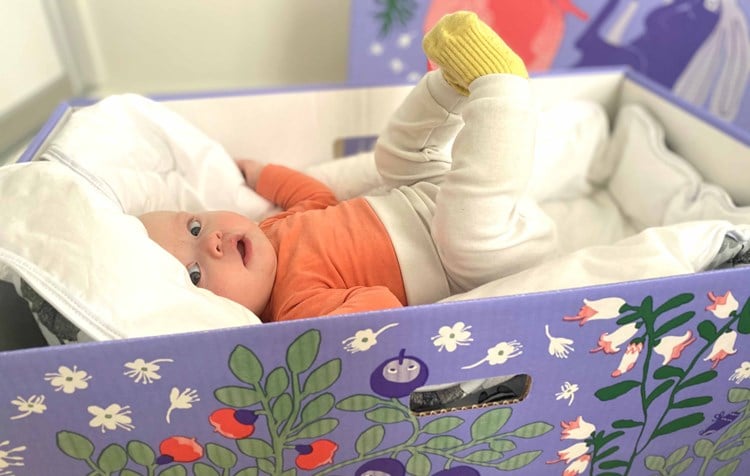
The maternity package includes two corrugated cardboard boxes: the actual baby box, which contains around eight kilograms of clothes and baby-care items and also doubles as the baby’s first bed, and a separate transport box used for shipping.The modern version of the baby box was designed in Lahti in the 1960s at Stora Enso’s corrugated packaging factory.
The ingenious structure was created by Heino Partanen, who is still remembered at Stora Enso as an exceptionally creative designer.During a packaging design career spanning about 40 years, Partanen developed many smart packaging solutions and received several international awards. He was also a graphic designer and visual artist.

- What is particularly clever about the innovation is that the box can be delivered flat-packed while still being easy to assemble. The structural solution has remained essentially the same for more than 60 years, although the appearance of the box always reflects its own era, says Anonen.
Safety through the right material choices
The contents of the maternity package have changed continuously over the years.
- By using virgin-fiber-based raw materials, we ensure safety. This is extremely important because many Finnish babies sleep their first months in the baby box, Anonen explains.
The story of the Stora Enso baby box begins in the forest
Slow-growing Finnish wood is especially well suited as a raw material for corrugated cardboard. Both softwood and hardwood are used in production.
The fluting middle layer often uses hardwood fibers such as birch because they shape well and provide rigidity. The outer liners use a high proportion of softwood fibers, whose long fibers add strength and durability.
Cooperation between Stora Enso factories
Most of the raw materials for the baby box come from Stora Enso’s own mills: corrugating medium from Heinola mill, brown inner linerboard from Varkaus mill or Oulu mill, and white outer linerboard from Oulu.
These three grades of cardboard arrive at the Lahti factory in rolls. A corrugating machine combines the three layers into corrugated cardboard sheets.
The sheets are then printed, cut, folded, and glued. The boxes are delivered flat-packed to a contractor selected by Kela, Finland’s social insurance institution, where they are assembled and filled. Annual production is around 30,000 baby boxes.
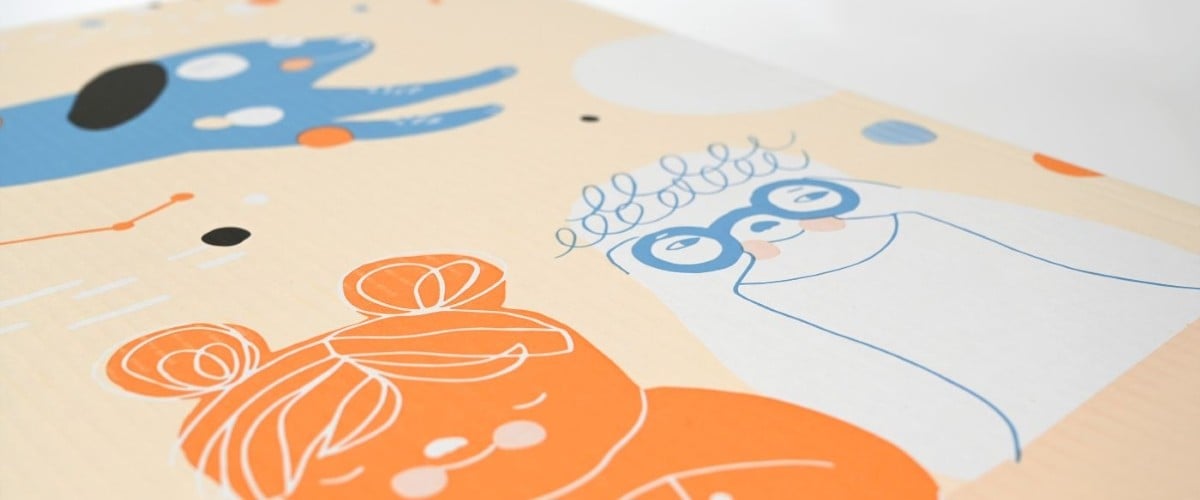
The photo shows the 2026 baby box manufactured at Stora Enso’s corrugated packaging factory in Lahti. The beige pattern for the 2026 edition is called “Imagining the Future.”
The evolution of the baby box packaging design is part of the maternity package brand.