Box Compression Test for Packaging Performance
What is a Box Compression Test and packaging performance?
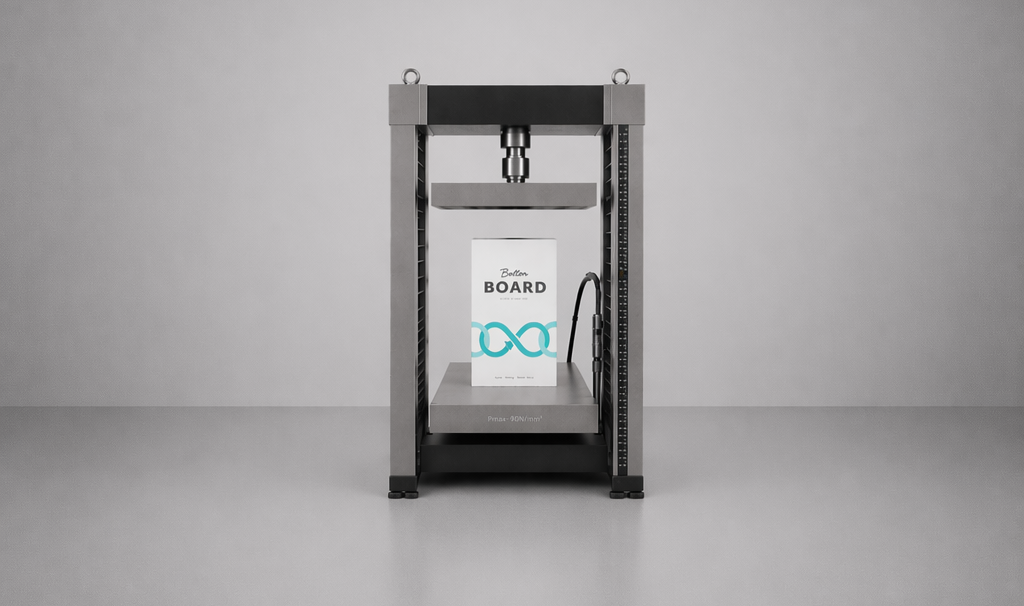
The Box Compression Test measures how much vertical load a box can withstand before it collapses. It simulates real-life conditions during stacking, storage, and transport. This makes BCT a practical and reliable way to evaluate packaging performance under load—something that board properties alone cannot fully predict. Even when the product inside can carry some weight, BCT remains an important indicator of packaging strength. When products are sensitive or require headspace, it becomes critical, as the packaging must provide protection.
BCT goes beyond individual material properties. It reflects how material, design, and converting work together in the final packaging solution. By looking at the performance of the finished box—not just the board—it provides a more relevant understanding of real-world behavior.
Enabling lightweighting without compromise
As the industry works to reduce material usage, maintaining performance is essential.
Using BCT as a benchmark allows packaging developers to:
- Optimize board structure
- Reduce basis weight
- Maintain required strength
With the right design and material engineering, it is possible to achieve equal or improved compression strength with less material. This supports lower costs, improved logistics efficiency, and a reduced CO₂ footprint. Read more about or Performa Nova and Performa Lumi grades.
From testing to better decisions
The Box Compression Test is not just a testing method—it is a tool for smarter decision-making. By combining material expertise, structural insight, and performance testing, packaging can be designed to deliver the right strength with the right amount of material. In a world where efficiency and sustainability go hand in hand, understanding BCT packaging performance is key to getting packaging right. Get in touch with us to know more about Box compression test or on how to make smarter packaging materials decisions


